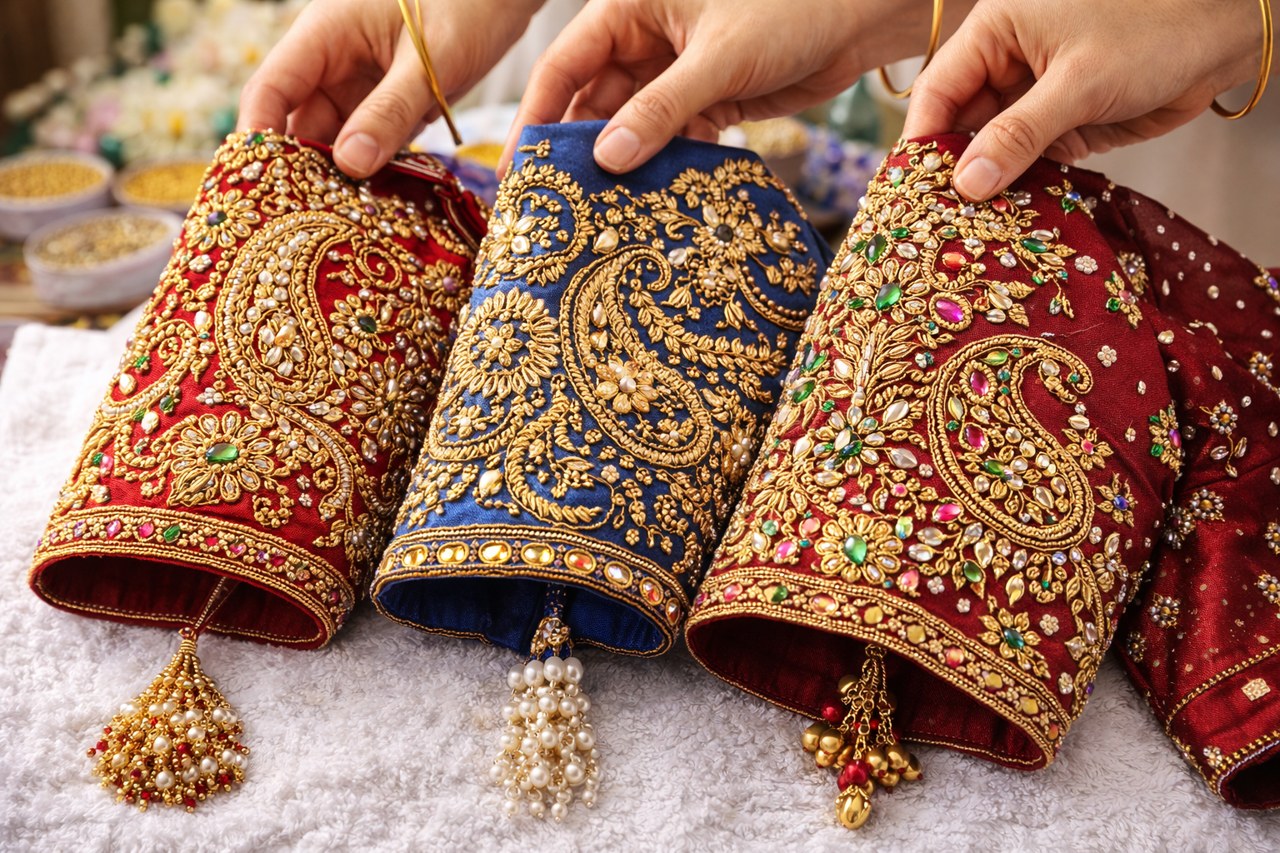
Choosing embroidery for your wedding blouse is one of those decisions that sounds simple until you actually start doing it. There are dozens of styles, multiple techniques, and no shortage of opinions from everyone around you. After years of working with brides across Tamil Nadu, these are the questions we ask every customer before touching the needle.
Start with the saree, not the blouse
The most common mistake brides make is deciding on the embroidery style before finalising the saree. Your saree is the dominant visual element — the blouse should complement it, not compete with it.
The rule we follow: if the saree has a heavy, detailed border or a rich pallu with a lot going on, the blouse should be restrained. A simpler thread work in a complementary colour reads better than another layer of heavy stonework fighting for attention. Conversely, if the saree is relatively plain — a solid Kanjivaram or a minimal georgette — the blouse is your opportunity to add detail and interest.
"The blouse should always serve the saree — not the other way around."
Understand the three weight levels
When we talk about embroidery "weight," we mean both visual weight (how busy it looks) and physical weight (how heavy it feels).
Light work — thread and fine Aari
Delicate chain stitch patterns, thin vine or floral motifs, single-colour thread work. Light work sits flat against the fabric, adds visual interest without bulk, and is extremely comfortable to wear for long hours. It photographs well in natural light and reads elegantly in close-up shots. Ideal for reception, mehendi, or any event where you'll be moving a lot.
Medium work — mixed Aari with stone accents
This is the most popular choice for bridal blouses. Thread work combined with selective stone or bead placement — usually at the neckline, sleeve edge, or as motif highlights. The stones catch light beautifully in indoor photography without making the blouse feel heavy. This style works for almost any occasion and is versatile enough to complement both heavy and lighter sarees.
Heavy work — Zardosi and full stone coverage
Dense Zardosi with layered stones, metallic threads, and high-relief embroidery is designed for weddings where the blouse is meant to be a statement by itself. It photographs exceptionally in artificial lighting. Be aware that it adds noticeable physical weight and may feel uncomfortable during extended outdoor ceremonies. Most brides who choose this opt for a lighter blouse for the reception and save the heavy piece for the main ceremony.
Match the embroidery to your jewellery
- Heavy necklace: Keep the neckline embroidery minimal. A statement necklace already fills the neck area. Focus embroidery on sleeve edges or back instead.
- No necklace or minimal chain: The neckline is your canvas. Detailed motifs, stonework, or a decorative border that frames the face reads beautifully here.
- Heavy arm jewellery: Keep sleeve embroidery restrained. Let the jewellery do the work from elbow down and place embroidery detail closer to the shoulder.
- Temple jewellery sets: These work best with traditional motifs — peacock, lotus, paisley — in gold thread. Avoid abstract or contemporary patterns as they break the visual language of the jewellery.
Consider where the photos happen
Stone and Zardosi work looks most impressive in indoor photography with artificial lights or flash — the stones pick up light and create a sparkle effect. In natural outdoor light, the same stones can look flat or wash out.
Thread-only Aari work reads consistently in both natural and artificial light. The texture shows up beautifully in close-up portrait shots. If your photographer shoots primarily outdoors or in natural light, medium or light work will serve you better than heavy stone coverage.
Coverage — how much of the blouse to embroider
- Neckline-only: Clean, modern, comfortable to wear. Works well when the saree is heavily worked.
- Border coverage: Embroidery along all edges — neckline, armhole, sleeve, hemline. Creates a framed, finished look without full-body coverage.
- Panel coverage: Embroidery covers the front panel completely. Bold and traditional. Pairs well with plain sarees.
- Full coverage: Front, back, and sleeves all embroidered. The most formal option. Typically reserved for main wedding ceremonies.
"Tell us your event, your saree, and your jewellery. The right embroidery follows naturally from there."
A simple checklist before you enquire
You don't need to have everything decided before reaching out. But the more of these you know, the faster and more accurate your quote will be:
- Is the saree finalised? If yes, what is the fabric and base colour?
- Is the blouse already stitched, or are you sending unstitched fabric?
- What is the main event — wedding ceremony, reception, or mehendi?
- What jewellery are you wearing with this saree?
- Do you have a reference image from Pinterest, Instagram, or our portfolio?
- What is your event date? This helps us confirm the timeline.
If you have even half of these answers, we have enough to start the conversation. The rest we'll figure out together through the brief.